


Listen This Article
“African studies” in general could be understood as the study of Africa, especially the continent’s history (Pre-colonial, colonial and postcolonial,, ethnicity, culture, politics, economy, languages, religion, etc. using traditional methodology of humanities and social sciences.
-
“African studies” from African perspective
As an academic discipline or academic field (subdivision of knowledge that is taught and researched at the college or university level) in modern academia, the outcomes of “African studies” largely depends on the perspectives from which the studies are conducted. For example, studying Africa from European perspective or American perspectives or Asian perspective will largely influence the outcomes of the study.
From an African perspective, a key focus in the discipline should be to sort out epistemological and critical approaches, theories and methods that insert (take into account) African-centered ways of thinking, knowing and referencing. In fact, “African studies” should primarily aimed at providing the most rightful understanding of Africa’s cultures and societies as lived by African people themselves. In some respects, the discipline should go beyond providing a global or specific knowledge of Africa through traditional Social science methodologies, it should be a response to global attitudes about African people and their historical contributions; it should seeks to correct what it sees as prejudices and misconceptions perpetuated by the racist philosophical underpinnings of western academic disciplines (still dominating the modern academia) as they developed during Europe’s Early Renaissance.
It should be clear that, there is no “African Studies” without a proper understanding of “African people ways of thinking” or without the “knowledge of mainstream African ideologies”. Africa is a place where people are found and must be understood rightfully. In this 21st century where powers’ interests on the continent are guided by their appetite for natural resources and market driven ambitions, the “study of Africa” by these powers has been resumed to measuring the amount of profits and credits that one can draw out of the continent regardless of socio-cultural legacy to mankind generated by the dynamism of African people. To understand this, perhaps it suffices to take “the balkanization” of Africa by European colonials or western discourses on African history as examples. From an African point of view, the capitalist motives of colonial powers led to a geographical partition of the continent regardless of ethnicity, languages or cultural specificities of the people concerned, leading to an unbalanced and unprecedented destruction of African cultures and societies, resulting to the underdevelopment of Africa as we see today. But when studying African history from a European perspective, on can still be tempted to believe that colonization brought civilization and enlightenment to Africans, which is completely wrong.
Several Africanists (Experts of African Studies) from Africa or of African descents since the 20th century to present days have been working out to provide a vibrant response the global “misperception of Africa”, their voices and writings are inalienable contribution to “Africa’s way of thinking” and should be the backbone of any authentic “African studies” that gives priority to the rightful understanding of African people. The mainstream ideologies of Africanists from Africa or of African descents should serve as a guiding line in any field of studies that pretends to take into account the ways African see themselves in their socio-cultural and historical context and they address their geopolitical concerns.
Here is a non-exhaustive list of notable and well-known deceased Africanists whose thoughts should provide a guideline of any rightful “Study of Africa” from an African perspective:
DOWNLOAD THE FULL ARTICLE HERE
- African Studies from Chinese perspective
Long considered as third world countries, China and African countries have been at the margin of the world economic spotlights. But China’s economy has grown tremendously the past three decades to become the world second largest economy after the U.S and the biggest developing country in the world. Meanwhile, the African continent has become the hope of the world economic growth with the highest number of developing countries concentrated on the continent. For number of reasons, China has gradually come into a strategic partnership with Africa leading to an unprecedented need of mutual understanding, especially the understanding of Africa by the Chinese scholarship given the pressing need for China to keep up with its opening up policies and its growing global status. so, basically it is of urgent need to settle in Chinese academia a field of study that could help speeding up a proper understanding of Africa’s needs balanced with the Chinese core interests in the continent. In a certain extent, “African Studies with Chinese Characteristics” is a must in today’s Chinese academia. But what are the preconditions for such a discipline (field of study) to take place? From an African point of view, the following 4 preconditions have to be fulfilled:
…………………………
NEXT ON THE FULL ARTICLE AVAILABLE HERE
- Conclusion & Recommendations
As Africa is growing and playing a much more important role in the world global economy and geopolitics, there is a need for Africa’s strategic partners to speed up the study of Africa and the deepen the understanding of African people. But any consistent study of Africa has to take into account the ways African people see themselves and write their history in this multicultural world. Therefore, ……………
CLICK HERE TO DOWNLOAD THIS ARTICLE

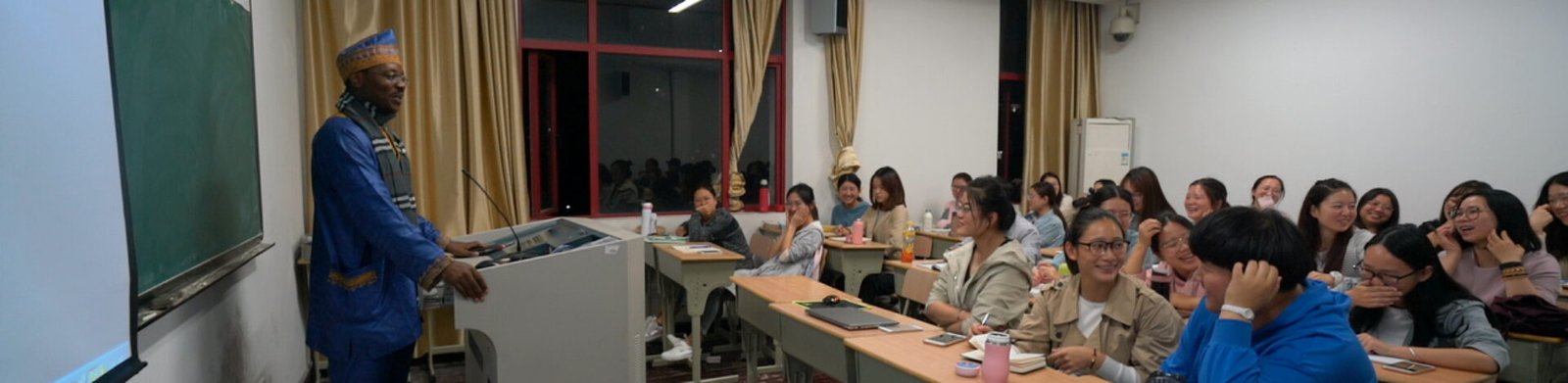
Author: TALING TENE RODRIGUE(大灵•德内•罗德里格)PhD. from Cameroon, is a Research Fellow at the Institute of African Studies, Zhejiang Normal University (China) and Vice-Director of the Center for Francophone Studies, Institute of African Studies, Zhejiang Normal University.


